
Composition and architecture –
in the nineteenth century they
became part of a greater entirety:
of opera, the total work of art
that was able to carry its
audience away into a completely
different world, at least when
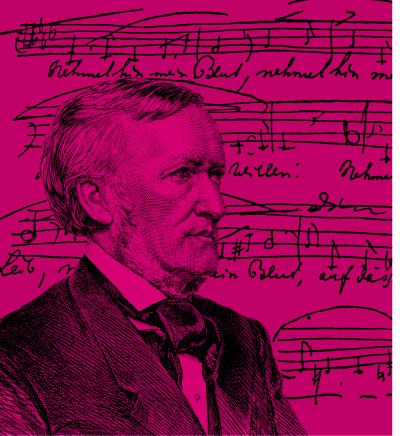
Richard Wagner was involved.
Yet not only the music,
but also the innovative
design of the opera
house was to make
a major contribution
to the magical effect.
»Without your help, I cannot think
of a performance for some time,«
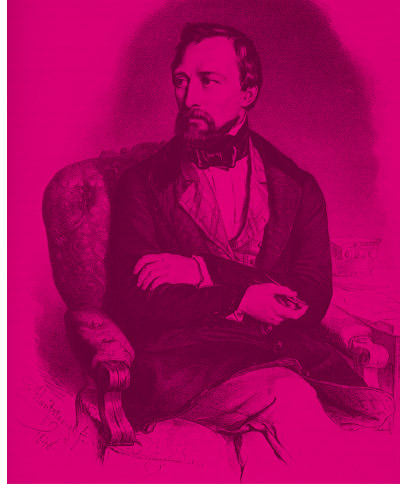
Wagner rhapsodized in 1854 in
a letter to his favorite architect,
Gottfried Semper.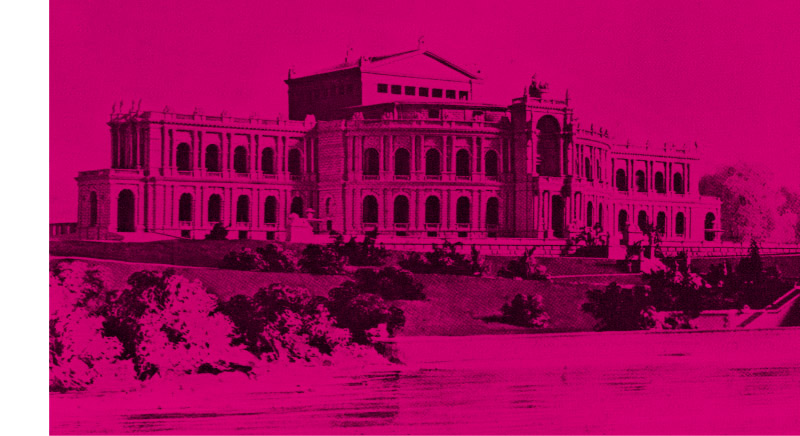
At that time Semper had already
built his first opera house in
Dresden, which was later
destroyed by fire, but otherwise
was making ends meet with
occasional commissions.
In 1864 his and Wagner’s dream
of a monumental festival hall
seemed within reach. For the
eighteen-year-old King Ludwig II,
they planned in Munich “a large
theaterin the finest style” –
with an orchestra pit, stairs,
colonnades and a huge stage
machinery. However, the newly
crowned client was not able
to implement this plan.
Some of the ideas were later
included in the design of the
Dresden Semper Opera of today.
To this day, Semper’s design
of a triumphal amphitheater
for Munich influences our idea
of an ideal opera house.
And it remains an inspiration:
as a vision of the
enchantment of stone
by sound, and of
sound by stone.