
In the twentieth
century, Le Corbusier
and Iannis Xenakis forged
an entirely new alliance
of sounds and buildings.
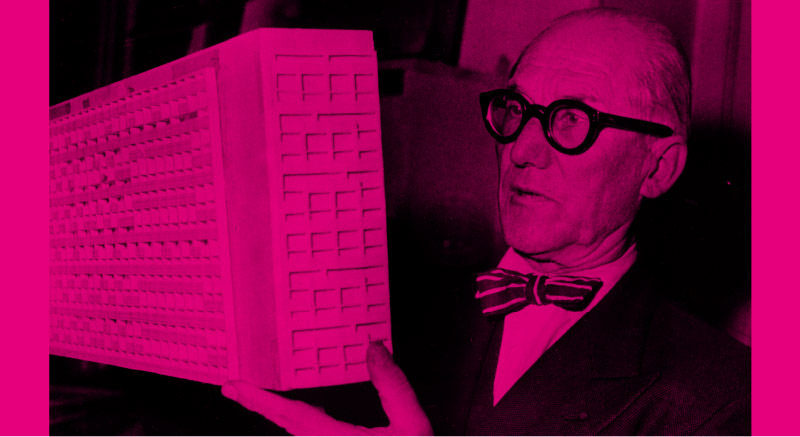
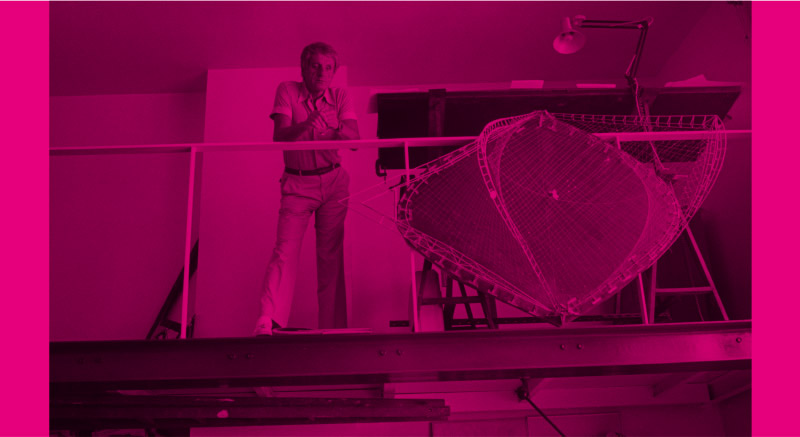
Xenakis was not only a pupil of
the brilliant Swiss architect,
but also a composer. In this role
he introduced the Modulor system
of proportions, with which
Le Corbusier wanted to optimize
architecture for human dimensions,
into serial music.
For the World Expo in Brussels
in 1958 they jointly conceived
the Philips Pavilion.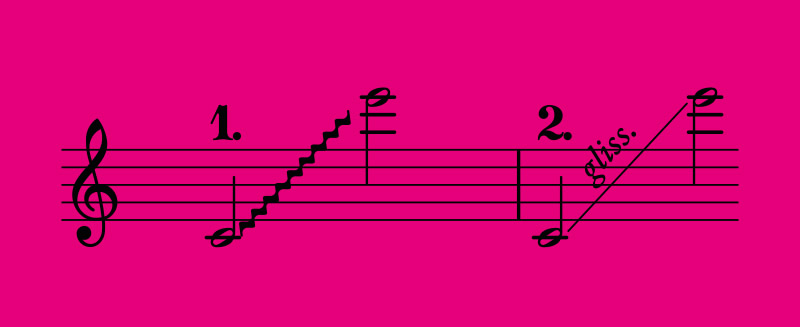
String glissandi
in graphical notation
were transformed
into the curves, points
and tangents of a
roof structure that is
both perplexing and
fascinating.
The intention was that visitors
should perceive the curved concrete
shells above paths and spaces
like music. Inside the pavilion
a bold electronic composition
was replayed in an endless loop.